Anette listened in silence as Erlon spoke, telling the story of his sister and the loss he’d kept sealed away for so long. It was early Saturday morning, a week or so after the dreams had stirred up these old thoughts. He had no plan to tell her of the dreams themselves—he couldn’t understand them, and had no way to express them even if he wanted to—but this was something they could both comprehend, to some degree at least. Something he didn’t have to feel utterly alone about.
She held her coffee mug in both hands, only setting it down on the table when Erlon fell silent at last. It had grown cool in the hour since he’d begun talking, the words slipping unexpectedly from his mouth as they enjoyed their weekend morning ritual: watching the sunrise, bathing in the twin scents of coffee and nag champa. The incense, too, had burned all the way down, though a thin, ponderous line of smoke still rose from the ember.
“One thing she told me,” Erlon said, as if in an afterthought. “Don’t let people change how you feel about yourself. The way they talk to you or treat you. That always stuck with me.”
“It sounds like she was an amazing young woman,” Anette murmured, clasping his wrist and squeezing it.
He slid his hand through it till he clasped her fingers in his, and smiled. Was she? He had never thought about Tannile in those terms—an amazing woman. In some ways he guessed she was. There was a lot about her he had never known, though. He saw that now more than he ever had. Who had his sister really been? How much of her story did his memory tell?
He said none of this aloud, though. He only nodded.
“What made all this start floating up again?” Anette asked.
His eyes clouded over. A part of him wanted to ask, and nearly did, “Netty…do you think there’s anything…missing from me?”
But he didn’t really even know what the question meant. And it would only lead to more questions, ones he couldn’t answer.
“I saw Oscar,” he said instead. “Last week, stopped by after work. He mentioned her.”
It was true, as far as it went, though it was no real answer. It was the best he could do for now.
She nodded. “The two of you talk about her?”
He shook his head and smirked bitterly. “No. How can we? He thinks he honors her memory with that photo in his house, but he was gone when she died. Even missed the funeral—didn’t find out till the week after. Even then he didn’t come home. Just sent a postcard I never even read till Grandma passed and I was going through her things. A scrawled out excuse: him coming back wouldn’t do no good to anyone, that he was sorry.”
“Child!” She sat back, head tilted. “That don’t sound like Oscar.”
“Well, maybe he’s changed. Maybe not. We never talked about any of it. By the time he did come back, we both sort of agreed without saying so, not to talk about it.”
“Well, thank you for talking with me, baby. Telling me about it. I know it wasn’t easy bringing all of that up again.” She rose and kissed him on the cheek. “You want more coffee?”
“No, thanks,” said Erlon. Now that he had got it all out, as much as he was able to, he seemed tired, his focus gone. Anette touched his shoulder and, smiling, strode alone into the kitchen.
* * *
Tannile’s story stuck with Anette in the coming days, its sad simplicity. It was that simplicity, maybe, that she found arresting. Though Erlon was grown, it was a child’s story: rough and unfinished, with many details missing and gaps implicit. On her morning commutes to the peninsula, or while grading essays in her office at the city college, little questions would rise in her mind, aspects she hadn’t thought of before.
Most of it, unsurprisingly, was impossible to verify on the Internet. A young Black woman going missing, even dying, would not have been reported in the local papers of that era, so there was little to find in news archives. Who might she know who had lived here at the time? Beyond Erlon, Oscar was her closest connection to all of it, though he had been living in Chicago back then. Maybe June, their neighbor and close acquaintance. June knew a lot of people in a lot of places in the city, and in several surrounding towns.
She went to Oscar first, one Friday morning on the way to work. Her brother-in-law worked late into the evening yet rose early in the mornings, keeping busy in the face of long, solitary hours. Like her, he was a teacher (though the local middle school music program, she imagined, was a far cry from the college’s dry, dusty literature department). So there was a chance he might have already left for work by now.
It was that chance, she realized with some surprise, that had made her choose to come now, on a whim, instead of waiting for the weekend or evening when she knew he’d be free.
Oscar was home, though. He gave a sly smile as he opened the door and angled his head back, inviting her in as if he’d expected her. It was silly to think, but she couldn’t escape that impression.
“Hey Anette, come right on in. We still on for dinner Sunday?”
“Erlon’s got the grill all ready,” she smiled.
“Have a seat,” he waved toward the living room. “You want some coffee? Made a whole pot and I still have plenty left.”
She watched him shuffle into the kitchen then sat on his sofa, glanced around the room. At his old turntable, the painting on his wall Lamar had given him two birthdays ago, the piles of old magazines stacked on his coffee table. Then she stood, remembering the photo Erlon had mentioned. It hung just behind where she’d been sitting, framed, black and white. “Tannile,” she whispered.
She studied the face, trying to put a name to the girl’s expression. On an impulse, she fished her phone out of her handbag, snapped a picture of the photo, and sat again, just as Oscar emerged with a steaming mug.
“That’s your sister, right?” she said, craning her neck up as if she’d just noticed the photo.
Oscar smiled, sinking into the armchair opposite her. “Yeah, that’s Tannile. But whatever else she was, she’s…a long story. One I don’t imagine either of us has time for this morning.”
Anette nodded. “Erlon’s told me some of it.” She sipped her coffee. Oscar blinked.
It was true, she realized. She didn’t have much time just now, and there were so many questions. What to ask?
“Who took the photo? I don’t imagine your family owned a camera back then.”
He shook his head. “A white fellow came to the island one year for a study. He wanted to take pictures of anyone who would give permission, and Tannile said yes, on the condition he gave her a copy.”
A dead end, then. She nodded, glanced at Oscar’s clock. “What do you know about this Shem person?”
He chuckled, shook his head. “Oh, I knew Shem. Back in the day at least. Knew him enough to know he didn’t kill her, or whatever Erlon told you. She died of cancer would be my guess, though of course they didn’t care enough to do an autopsy. But you know that wouldn’t stop Erlon from blaming him.” He sipped his own coffee.
“Why not?”
“Cause he still took her away from him. That’s the way he would see it.”
Maybe that was true.
Oscar stood. “Anette, I don’t mean to be rude, but maybe we could finish this talk a little later. Maybe on Sunday?”
She smiled and nodded. “Sorry to stop by at such an odd time.”
“Don’t worry,” he waved off the apology. “Listen, if you really want to know about all that stuff, you should talk to Keturah Jenkins. I’ll give you her number. She’s related somehow to Esau Jenkins.”
“Oh,” she said, pretending to know who that was. She could tell from his tone she was supposed to be impressed.
Oscar saw through the attempt. “Of Moving Star Hall,” he explained. “One of the great men of the community when I was a kid. Died when I was just ten.” He smiled. “I sometimes forget you came here from off.”
“I’ll take that as a compliment,” Anette smiled.
She rose and he walked her to the door.
“Do you have lilies, Oscar?” she asked. “I thought I smelled them when I sat down.”
He frowned, bemused. “No, can’t say I do. Not been much for flowers since Fiona died. It was good to see you, Anette.”
In her car, she looked at the image she’d taken of Tannile’s photo with her phone. She sucked in a gasp of air. It hadn’t been clear when she’d just glanced at it, or else she just hadn’t noticed, but the young woman’s face wore a withering scowl. Or was it her imagination? Anette studied the girl’s steady eyes, the placid line of her lips. She couldn’t tell. It felt somehow as if Tannile were staring out of the photo, out of her phone, glaring specifically at her.
Anette dropped the phone into her bag. Started the car. Her hands shook a little as she pulled out of Oscar’s street, heading downtown toward the rest of her day.
* * *
She had no classes on her schedule today, but Anette found the time as piled and cluttered as her desk. Between office hours, a completely pointless department meeting, a revision to the semester’s syllabus, and a pile of untouched paper proposals from her seminar on abolitionist writers, she felt swamped. Even so, her meeting with Oscar kept creeping back into her thoughts between moments, all the missteps she had taken. Why had she come so early, at such an inopportune time? Had she hoped he would be gone? Was there a part of her that didn’t want to follow this trail, even as she was drawn down it? Why had she chosen questions that led nowhere?
Though that wasn’t quite fair, she knew. That was how you found the answers, by asking the right questions. And sometimes to find the right questions you had to start with the wrong ones.
Yet her mind picked apart all the ways she had gone wrong, her angle flawed or lacking. And Tannile—that look of stark reproach.
All through the day she pulled up the photo on her phone, trying to figure out once and for all if the glare was real or imagined. The more she looked the less certain she felt, until she began to berate herself for that, too, You’re like a perfumer who’s blown out her nose, she thought, unable to tell a real scent from a phantom one.
She couldn’t help it. Tannile’s look felt like an indictment of her very person.
By four o’clock Anette had barely checked off half the items on her day’s list. She felt exhausted. There was no use, she decided. It was time for a break.
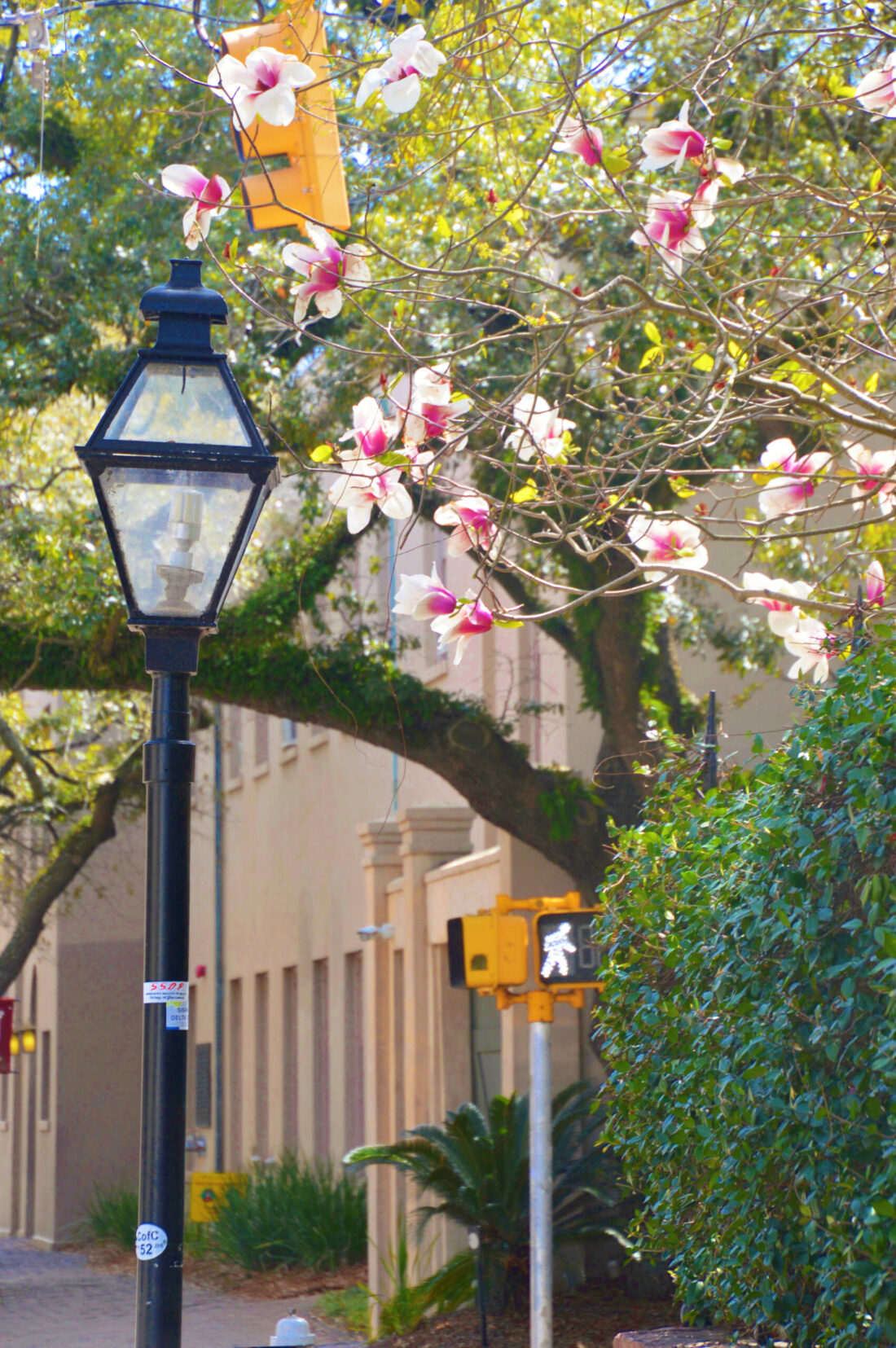
A short walk east through the greenway, and two blocks down the crowded, shady street, did her good. Lost amid throngs of students headed to classes or their various dorms, she could finally breathe again by the time she ducked into the dining hall where she ordered a quick coffee and strawberry granola parfait. This was what she needed. A change in perspective.
Was that what Tannile had needed? she wondered, tasting the first spoonful of yogurt. Was that why she’d gone off with Shem? Did he take her to places she hadn’t seen, show her things that broadened her world?
She could understand that, if so. Anette had sympathy for this poor girl, who she still thought of as a girl, though they would not be far off in age from each other had Tannile lived. They might have been friends. They would be sisters.
Would she have liked that? Wanted it? That haunting stare in the photo suggested otherwise. Anette had no idea what Tannile wanted, nor who she really was.
Yet she felt drawn to this dead girl. Something about her story, some fact left unspoken, unknown beneath some unturned stone, nagged at Anette.
She shook her head. The break had refreshed her, shaken loose some clogged thoughts, but it was time to get back to work. She swallowed the dregs of her coffee and left. A sheet of warm spring air brushed her face as she passed outside again, along with the faint scent of lilies.